After hundreds of hours over several years, my latest novel, WHISTLE SWITCH, is now published and available for purchase on Amazon. Thank you to everyone who has followed me and helped out along the way. If you want to see where all this effort went, please pick up a copy and leave me a review.
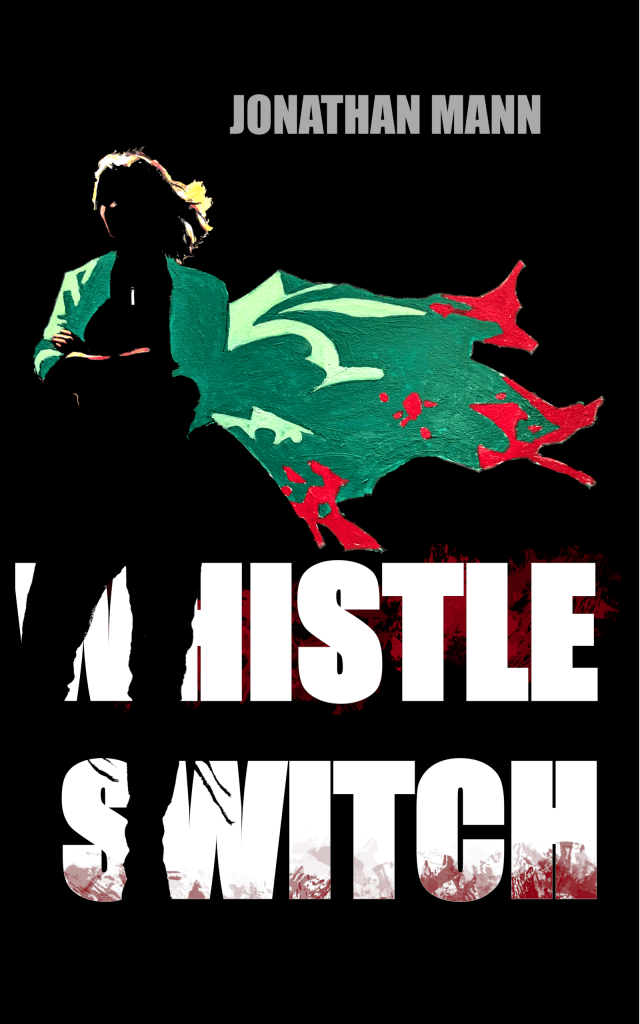
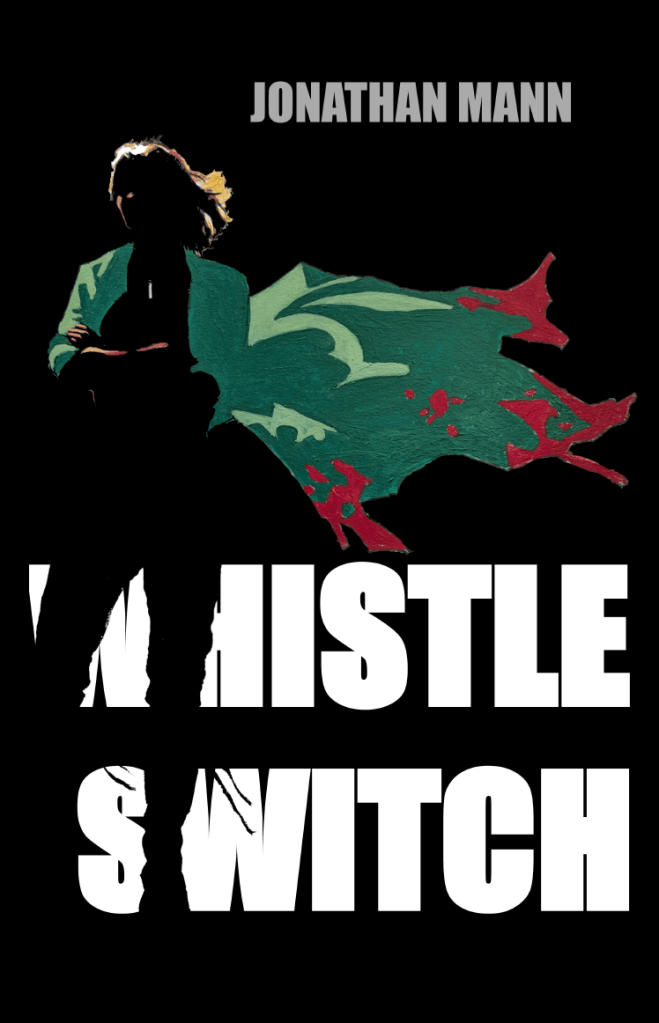
I think this is it: the book may finally be ready for publishing. I received an author’s proof, and remembered that Amazon tends to print a little dark. I punched up the brightness of the cover image, which is a slight shame, as some subtleties in the details get lost this way. After a bit of thought, I decided that the cover is still slightly plain. I wanted it stark, but modern book covers are very (ridiculously?) busy. Thus, I added in some nuances, particularly to the lettering. I think this also helps the main image to compete with the title block a little.
Here’s the original (below):
And here’s the updated version (below):
Now that I’ve added those details, the original looks a bit plain.
Lastly, I decided I used the word “said” a little too much. The word tends to become invisible to the reader, unless it’s overused, at which point it becomes noticeable (and clunky) again. I did a pass of paring down its usage, as well as some other very minor tweaks.
If the latest proof comes back good, I literally can’t think of anything else I could possibly do to improve this book now, and it will be time to publish.
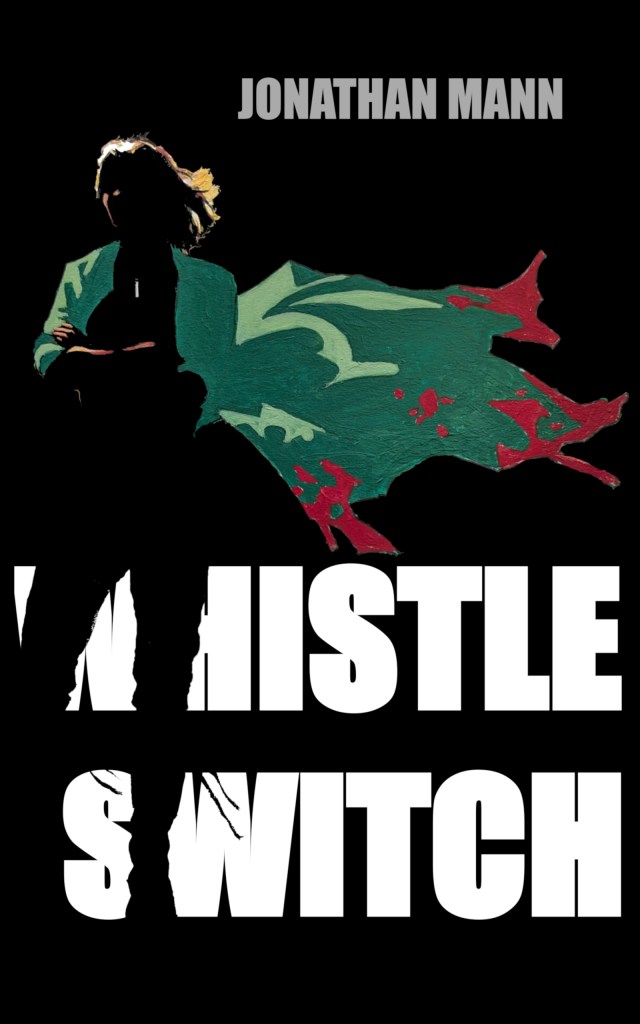
I ended up working on the design from the rough, more and more, until I started liking the way it popped against a sharp, digitized background. I decided not to have the original artist take it any further, and I finished the cover using the rough.
Here is the completed design image, with the title and author blocks:
Without really planning specifically for it, I got my Frank Miller-esque cover after all.
I built the complete cover wrap and uploaded it to Amazon KDP. I also did a final pass on the novel, cleaned up the front and back matter, and uploaded the formatted manuscript to KDP. I tweaked all the little settings for the release and ordered an author’s copy to see it in its final, physical form. I’ll get that in a few days, and if everything goes well…
The first thing to understand about taking reference pictures with a model is that you take a LOT of pictures, in all kinds of lighting, positions, and angles. Even with a pretty clear idea in your head of what you want, the process has a mind of its own (similar to writing the character!), and you have to let it guide you to a natural, superior outcome.
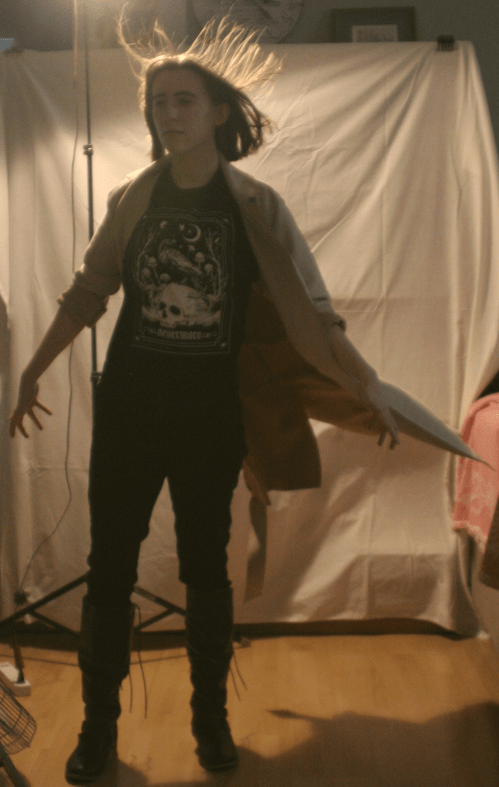
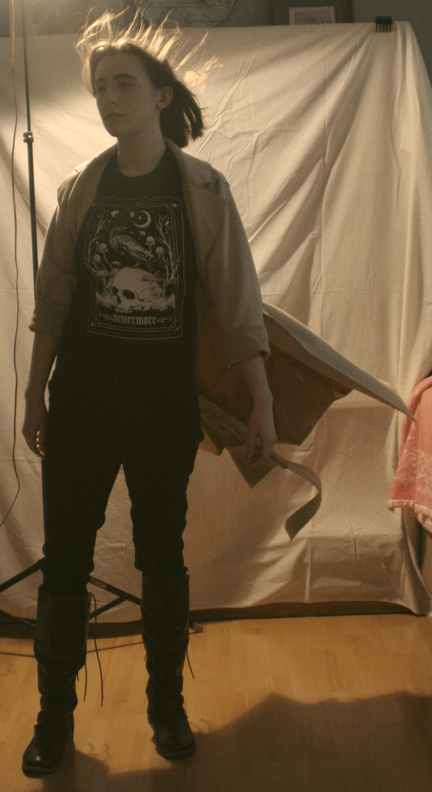
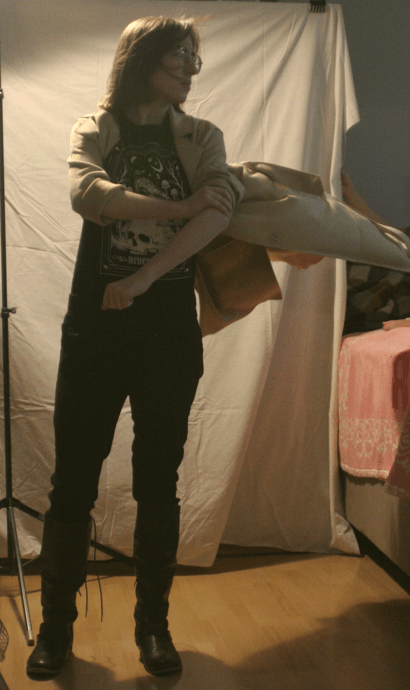
Here are some interesting shots, that ultimately did not work out, but helped us find what we ultimately wanted:
This one was cool, but a little stiff. Plus, felt like it was more of a “magic” stance and less of a “superhero” stance. The coat’s not bad here (this is with a leaf blower).
This one is good, but a bit passive. It’s almost wistful…
We’re getting closer. This pose is more purposeful, and the coat is doing…something, but this angle and position present some challenges for what we were ultimately going for.
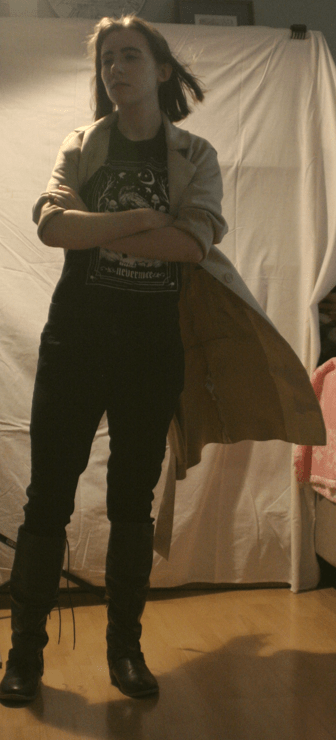
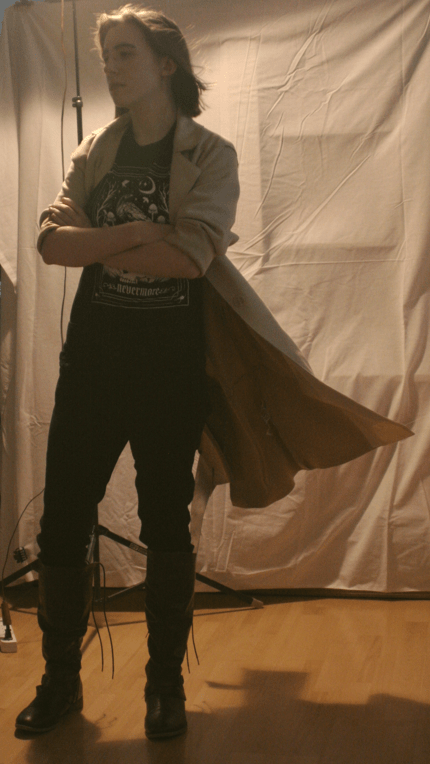
This gave us the idea of folding her arms in a sort of tough-girl pose. This led to a number of shots, two of which we used parts of:
We copied the top (above) of this shot into our composite, and we copied the bottom of this shot (below) in as well.
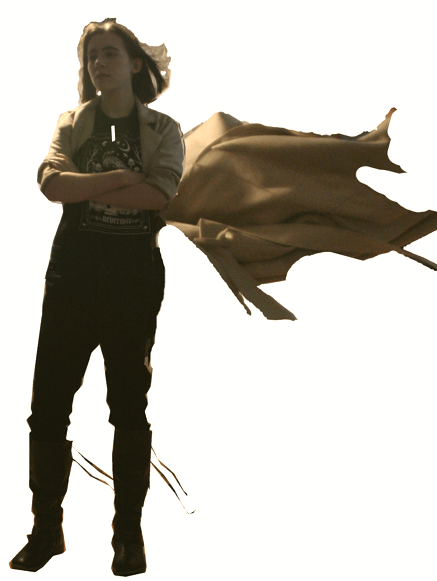
Ultimately, we took the best coat action from a completely different set of shots and used it (below).
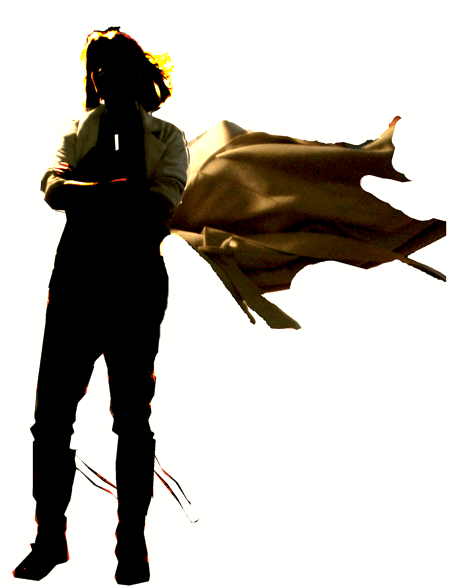
Below is the composite. Note that this is just for reference for the artist, so is fairly rough. Also, I didn’t have a prop for the trench whistle that Alexis wears, so we just digitally drew one in on the fly. After the shoot, our model pointed out that the laces were not really “blowing in the wind” like everything else, so we did a little manipulating there for it.
I had the idea of making the image a bit more stylized, wanting something along the lines of Frank Miller’s work on the Sin City comics (and later, movies). Below is a brilliant example of his imagery. Severely blocked-out characters and backgrounds, with a single, solid color for impact.
Inspired by this, we tried cranking the contrast and adjusting some brightness thresholds to get this (below):
Now, we’re getting somewhere. Carrying on the Sin City inspiration, we merged the “normal” coat back over the top of the high-contrast image, to get this (below):
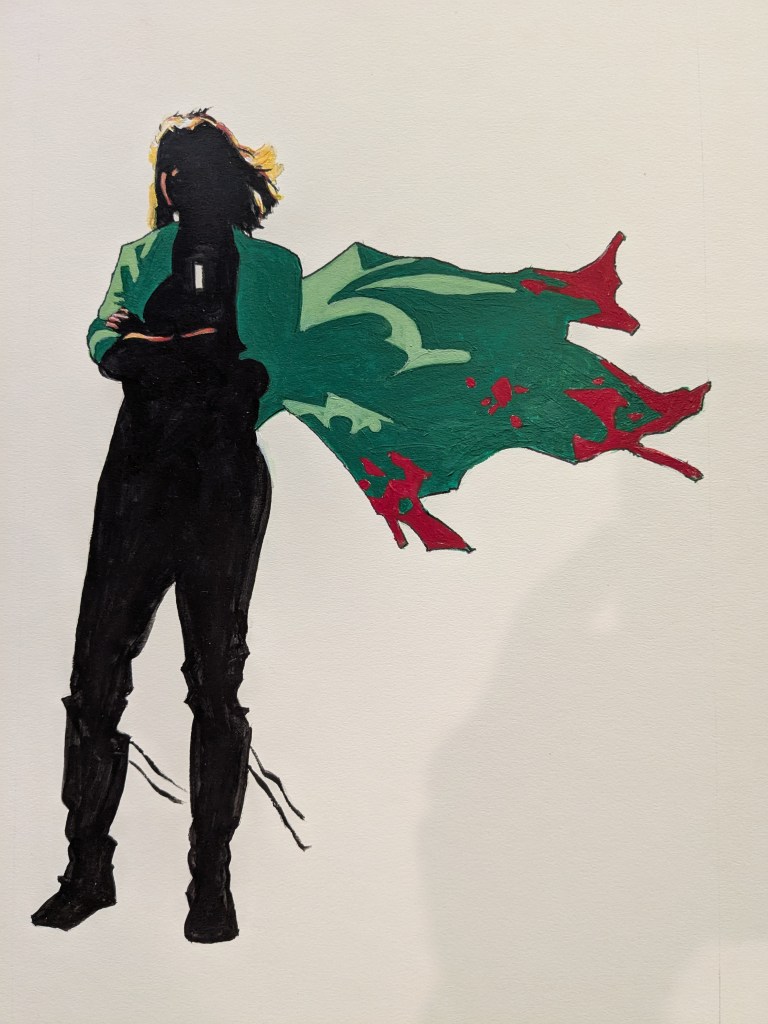
Good enough for reference. The character has a confident pose, the coat is genuinely going nuts behind her, and the stylized image is beginning to pop. The artist took this, and several notes from what I wanted to see in the final image, and went to work. They did some experimenting and produced a rough, which frankly (no pun intended), blew me away (I swear, still no pun intended). It was Alexis! Check out the rough below:
Epic. We discussed a few minor tweaks, and the artist is now working on the full version. I can’t wait to share it!
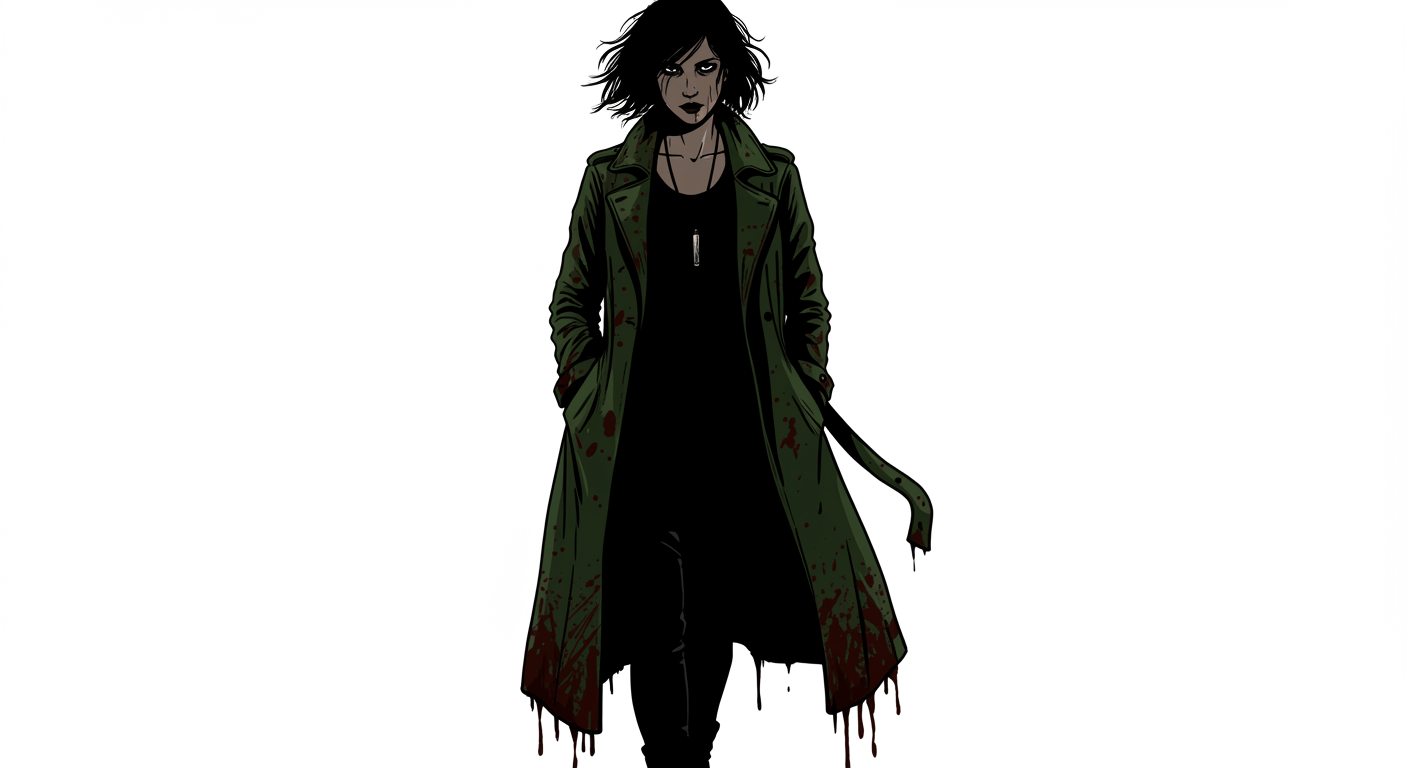
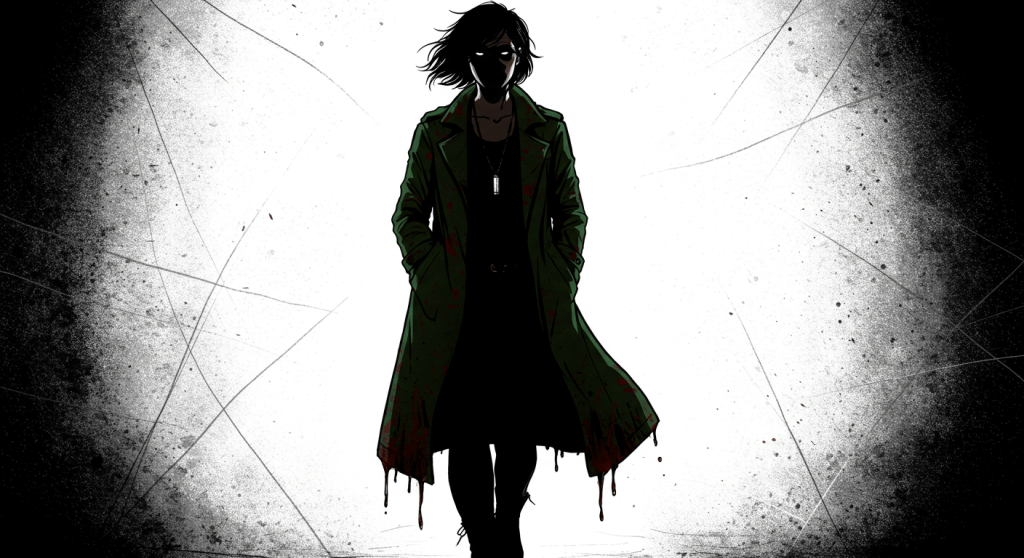
Once I had the initial idea, I used generative AI (I can’t remember which, but it was free) to create some concept images to give to the artist. The following are some cherry-picked results:
This (above) was pretty dang good. This is literally how I imagine Alexis looks in my head, and the blood-soaked bottom of the coat adds a nice edge. However, I purposefully try to avoid describing the way a character looks in too much detail; I want the reader to form their own images in their minds. Thus, for the cover, I want something more ambiguous. Enter: the silhouette.
This one is also pretty great. I started to realize that I wanted the coat and the whistle to stand out in contrast to the figure in silhouette.
This one I painted out by hand to make it fit a wrap-around book cover. The character is in deep silhouette (except the hands), and the coat stands out. Unfortunately, the jeans are blue, the coat is too short, and the image is a bit less dramatic. Still, just for fun, I made an author’s print of the book to see what it would look like.
Not bad, but I want something more impactful, and I don’t want to create actual art with AI anyway; this was just for preliminary concept work. These were a good start, but I came to realize it’s impossible to get AI to generate an image of a long coat that is *really* blowing up behind the wearer (a la the Face/Off scene referenced in my last post). I also couldn’t really find any images like this either, which is probably why AI couldn’t generate it. There are plenty of examples of capes flapping wildly, but not coats.
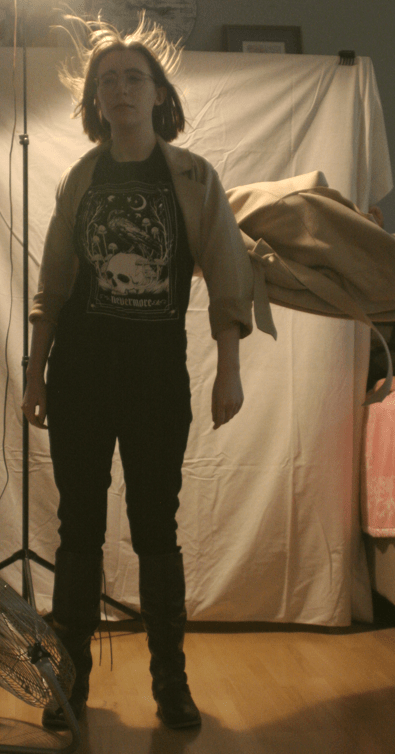
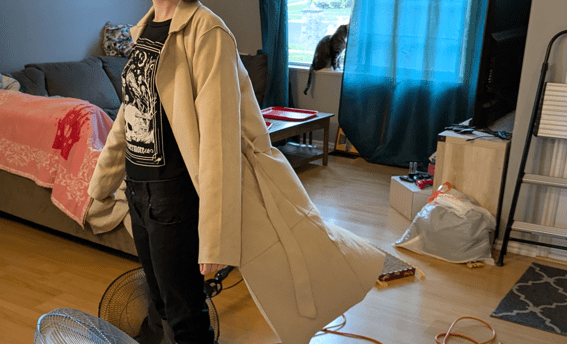
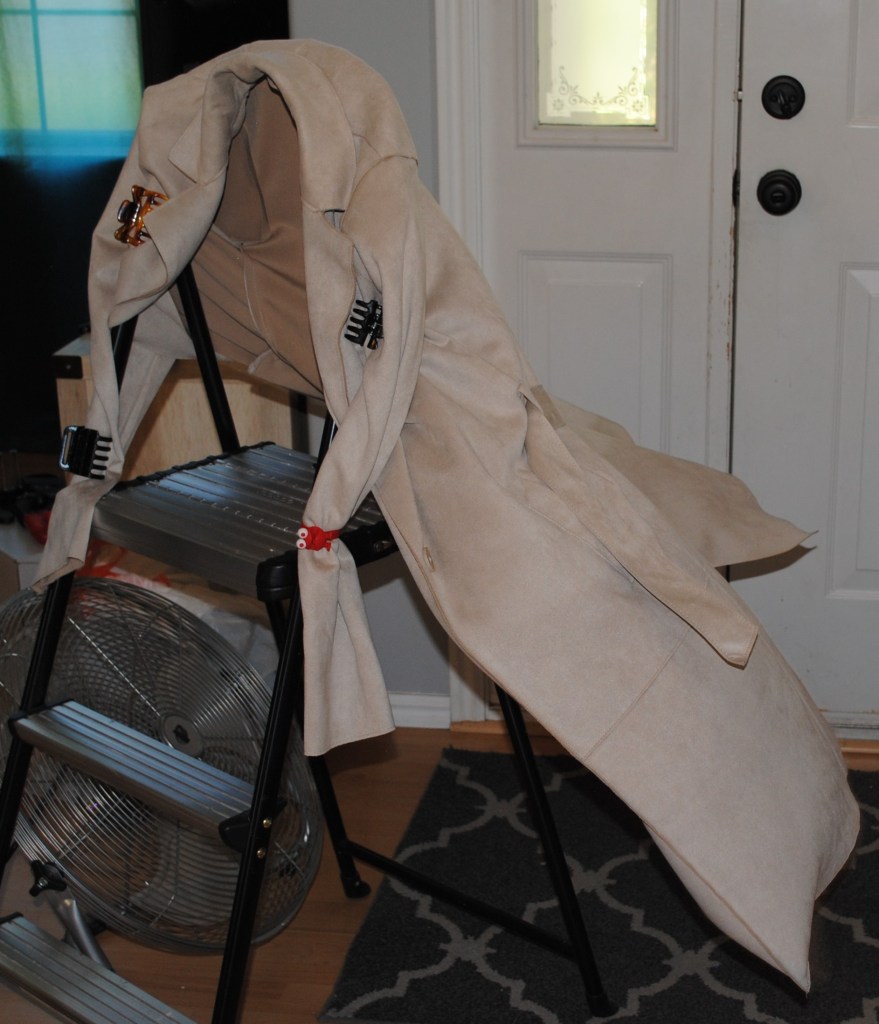
It turns out my daughter owns a long coat similar to what I imagine Alexis wearing (wrong color, but otherwise pretty close). I took a few test pictures with a powerful fan, to see what we could get.
It takes a lot more air to blow a coat up like that than I thought. Here’s another test, blowing air through the coat without the wearer:
Not much better. It kicks it up a little, but not in the same league that I wanted. I sent all this off to the artist, who had some ideas (particularly, an electric leaf blower). We agreed to get together for a photoshoot to see if we could get what we wanted.
Of course, I could just settle for the imagery I’ve put together so far, but the fact that I can’t find much on the internet (or in AI) like my vision makes me think I’m really onto something and should see it through.
It’s been a bit but there has been a significant amount of progress made in the effort to create an original piece of artwork for my new novel, Whistle Switch. I had an idea for Alexis on the cover, looking just as bad-ass as you expect. My first thought was to have an image that is a mix of a comic book cover and a particular shot from the movie Face/Off.
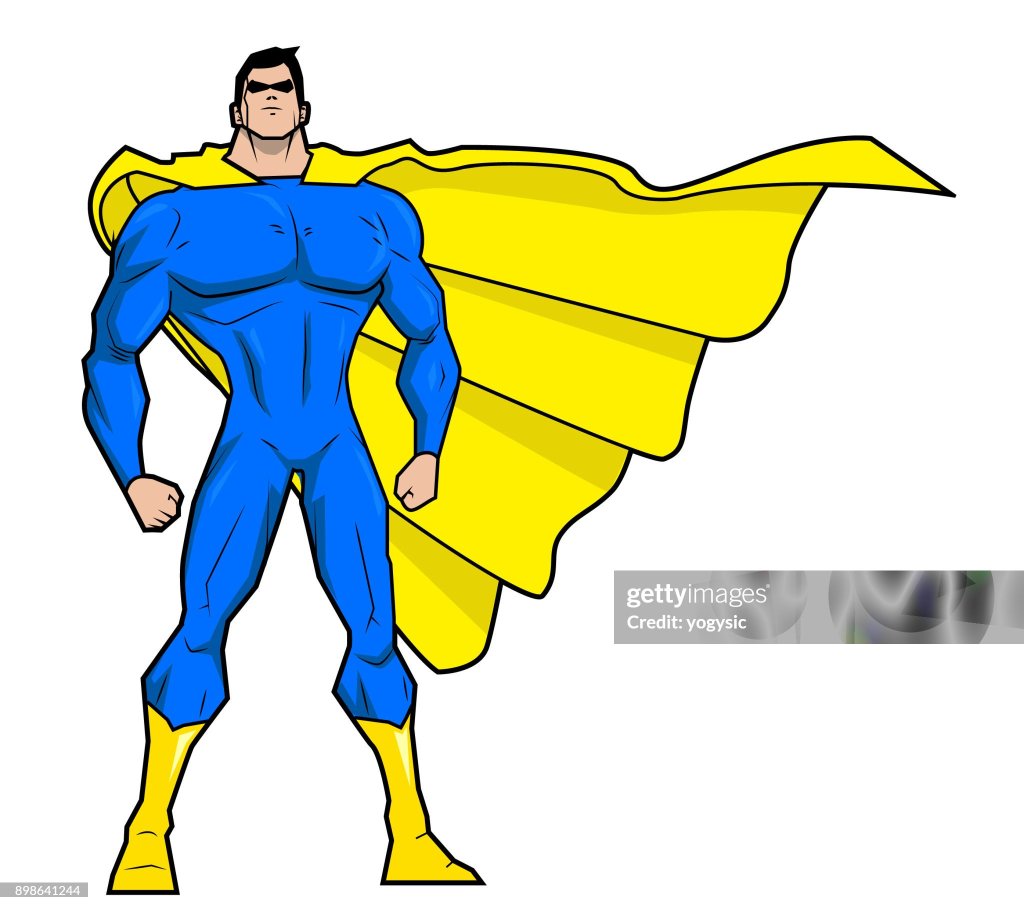
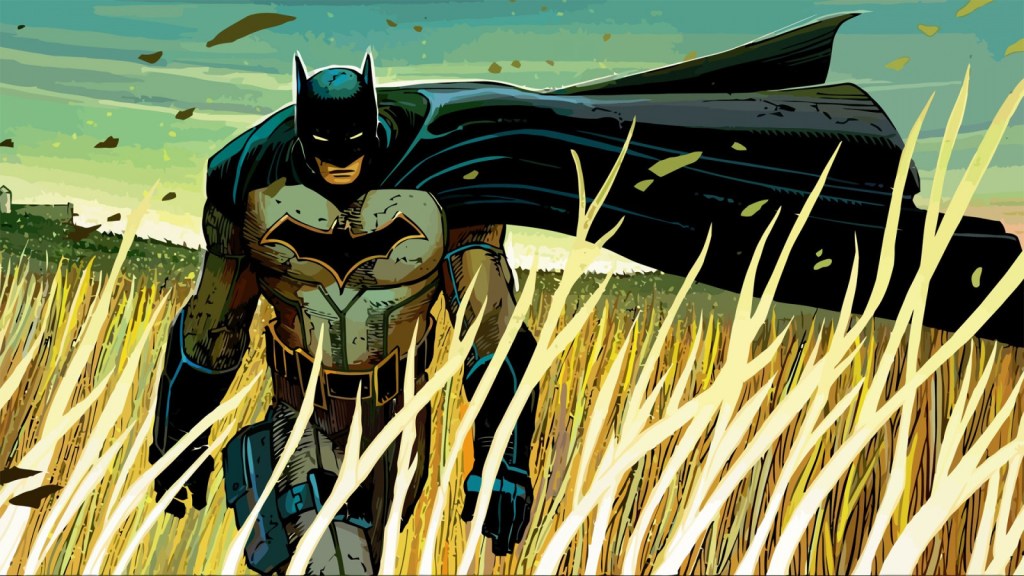
Let’s look at the classic comic image(s) first (don’t make me paste the fair use clause here…):
A vector illustration of a superhero isolated in white. Easy to grab and edit.
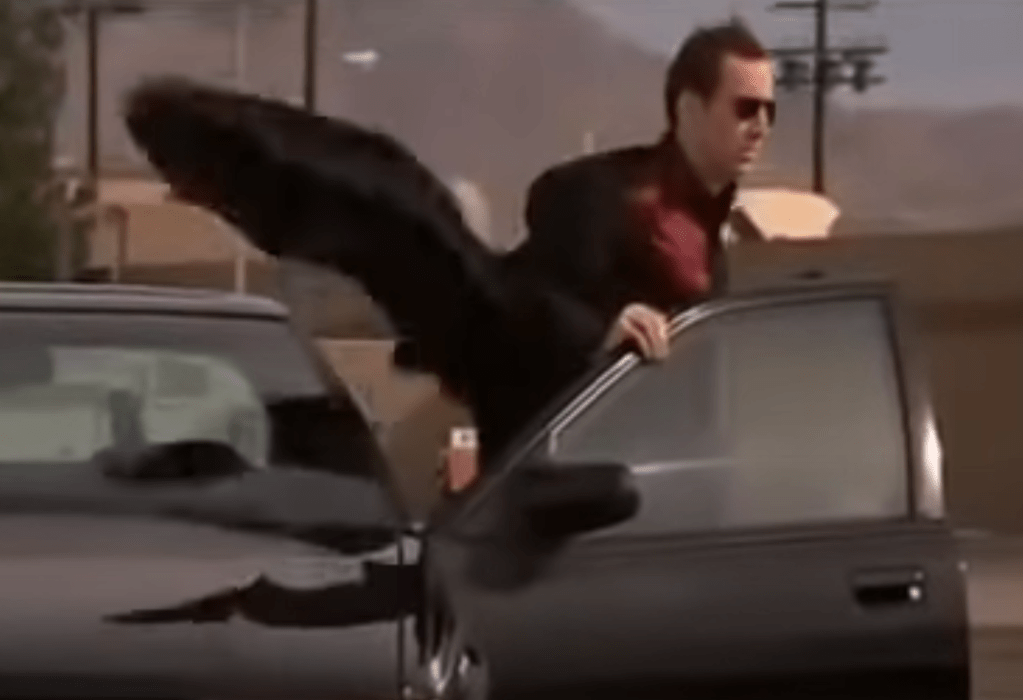
Very cool, but Alexis does not have a cape; she wears a long, green coat, which leads me to the iconic shot from the Face/Off (sorry about the quality, I just snipped from a YouTube video):
The above is literally one of my favorite movie moments of all time.
Okay, so far so good. The next step is to combine these inspirations with the character and vibe from my book. I got with the artist, and we spent a few hours taking photos with a model to compose a good starting image. I’ll update with some pics in the next post.
I’ve decided to withdraw my manuscript from querying agents, as I am going to self-publish this novel.
There are a variety of reasons for this decision, that I’ll explore below.
The biggest is that I had an idea of collaborating with my father, a semi-retired professional artist, on the cover design and art. I don’t know how much longer he’s going to want to do this sort of thing, so I didn’t want to wait any longer. I think we can create a cool, fun, lasting memento together. Creating your own cover is not really an option with traditional publishing, so I’m back to self-publishing. I can always make another run at traditional publishing on a later work.
I started writing novels as a hobby, and there’s not a particularly strong incentive (right now) to pursue this as a career. I suspect that doing this job, plus my day job, and everything else in my life, will be unnecessarily strenuous. I love writing, and it’s fun, but I can see where pushing it too hard may drag it from creative outlet to obligation. I’m going to let it slip a little more back toward hobby for now.
I also think that in some ways, my writing benefits more from the freedom afforded my by self-publishing. It also opens up a bunch of fun ideas, such as creating a “trailer” for my manuscript as though it was a movie, or experimenting with doing my own audiobook version. The world of traditional fiction publishing may just not be the best fit for me and my creations right now.
Last, I made a weird rookie mistake with this manuscript that might not be consequential, but has hung over this book since I began querying: I submitted a copyright for my manuscript. For a new writer, copyrighting your work seems obvious, as you’ve put countless hours into your intellectual property. The truth is, you’re already (mostly) protected by copyright law, and your amazing ideas are really just not that valuable anyway. The problem with submitting an official copyright is that if you do get picked up by a publisher, you’ll have to transfer that copyright, and someone will have to pay for it. Given how difficult and fraught the process is to get traditionally published, the last thing you need is an extra roadblock.
Stay tuned! I’m planning on posting some preliminary ideas or designs for the cover art as they develop.
I know this is a fraught subject, so let me just get this out there immediately: I don’t use AI to directly write any part of any of my novels. It doesn’t write any of the prose, and it doesn’t create any of the concepts. The writing and the ideas are wholly my own.
Having said that, there is one aspect of AI that I use extensively to improve my creative writing, and that is critique, as I have found it difficult to find good reader feedback. Most feedback is either not critical enough, or not timely enough. Friends and family are especially difficult to use here, as having them read an entire novel (especially in a rough form) is a big ask, and they are particularly resistant to criticizing. Even when hiring beta readers through an outlet such as Fiverr, the results can be pretty hit-and-miss.
Generative AI to the rescue.
Anthropic’s Claude (I’m currently using 3.7 Sonnet) is my go-to AI resource for writing. I did a bit of research before subscribing, and it appeared to be most recommended for creative writing critique. I have found it to be fantastic as a resource.
I write iteratively, constantly revising and rewriting plots, characters, etc. Using Claude allows me to write a section, have Claude critique it, and then I update again, have Claude critique again, ad exhaustium (yes, I just looked that up for this). A superpower of Claude’s is its ability to digest an entire novel and offer critique on both its entirety and its components. My manuscript is about 78,000 words, and it only consumes around 66% of my allowed “knowledge capacity”.
Claude is often overly helpful and wants to suggest solutions to the weak spots, but I ignore them and address them myself. It’s my writing, after all! In other words, Claude does the problem identification, and I do the problem-solving. I’m sure I could ask it not to suggest fixes, but I usually don’t bother.
There are limitations, but I find them to be navigable. For example: the larger the context, the more challenging the request to the LLM (generative AI is almost exclusively driven by Large Language Models, and context is something that all models have to deal with). I might create foreshadowing in Chapter 10 for something that is going to happen in Chapter 50. Generative AI may struggle to find and correlate subtle connections over a massive span of content (humans may not do much better!). Also, sometimes I just disagree with the critique. The AI may not see my grand vision yet, or may just have a different opinion about how something should play out.
This brings me to a final benefit of using AI: you can ask it to be harsh or forgiving, punishing or productive, and you can ignore everything it says without hurting its feelings. And if you need a pep talk, it feels weirdly good to ask it to say nice things about your writing, such as listing out the piece’s strongest aspects. Yes, I do this sometimes, and it helps keep me going.
I’ve found that using Query Tracker at https://querytracker.net/ to be likely the best tool for finding a Literary Agent. So far, I’ve mostly just researched potential agents, but this tool makes that relatively easy. You can find agents based on genre, which is super helpful. I was planning on just using Excel to track everything, but Query Tracker appears to have built-in tools for this and you can submit your queries right on the site, so we’ll see how that goes. It also has a lot of links for researching agents, including links to their manuscript wish list, which I highly recommend utilizing.
As part of my search, I decided to filter genre by “Fantasy, Contemporary/Urban”. This is not the genre that matches my manuscript for Whistle Switch, but I figured that any agent that was open to the above genre would be open to my novel’s setting (which is more along the lines of general “Speculative Fiction”, I think).
I dug through the listings and found likely candidates. As a matter of due diligence, I found authors that had signed with a particular agent (if any were listed), and then searched for that author’s published novel. If I couldn’t find any novels from the authors that had signed with an agent, I disregarded that agent. This may not be the best method, as there could be a number of reasons for an author to not go on to publish their novel (including plenty that have nothing to do with their agent), but I had to start somewhere.
When I run dry, I’ll circle back and expand my parameters or at least change up my process. I think this process can take a long time, but I really believe I’ve created something great with this novel. Wish me luck.
Since I’ve decided to pursue traditional publishing with my manuscript for Whistle Switch, I need to find a literary agent. Obviously, I am new to this process, so I’ve started with research. I’ve tracked down examples for a query letter, found resources for lists of agents, and gone over some basic tips.
Unfortunately, I’ve found that one form of procrastination is to do an excessive amount of research on something. It’s always easier to keep gathering information and internally pondering ideas than it is to actually do the thing. As I tell my kids about doing anything challenging: you can’t think your way out of it.
In the interest of action over rumination, I’ve written up my query letter (which took several hours on its own). One of the things I’m concerned about is the genre. Whistle Switch is a thriller with supernatural elements, which does not exactly roll off the tongue. I’m worried that calling it an urban fantasy, or even a supernatural thriller will get the manuscript dismissed prematurely. I also don’t want any potential agent to feel like I’m not being forward with the genre. Ultimately, I decided to address this by referring to it as a thriller, but making it very clear early in the query letter that this story has superpowered characters.
For comps, I’ve opted for V. E. Schwab’s Vicious, and Marcus Sakey’s Brilliance, two novels I highly recommend if you like the genre. I recently read Hench, by Natalie Zina Walschots and found it to be a fun read, but a bit more sarcastic than what I’m going for. I’m also just wrapping up the very famous Storm Front (the first novel in The Dresden Files series) by Jim Butcher. This book leaned much more to magic than superpowers, and it reminded me of a bit of Harry Potter for adults, so not quite appropriate as a comp.
Now, let’s see if I can get myself to actually start the querying process, and you know, stop trying to think my way out of it. I’ll update this blog as I go, and maybe that will force some accountability!







 Jonathan Mann